Self-Love & Worthiness Meditations for Confidence and Calm
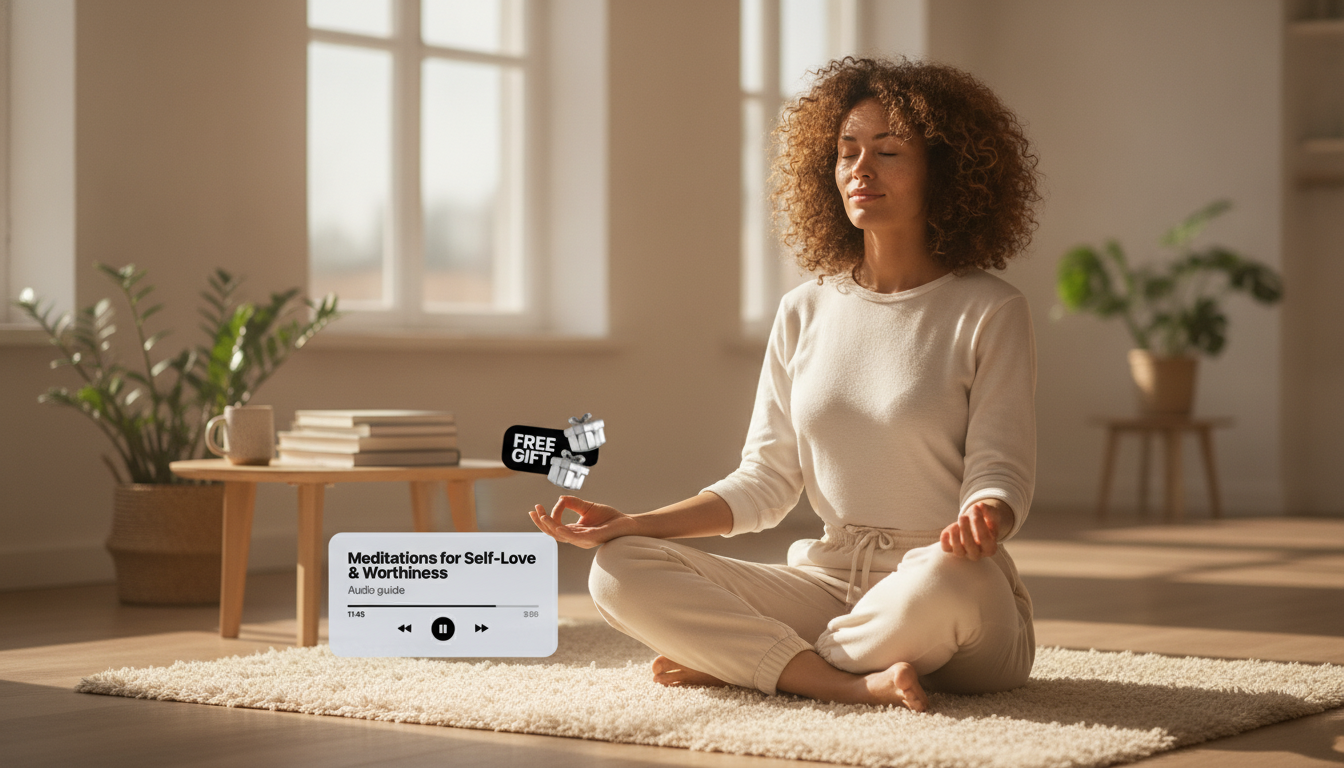
Meditations for Self-Love and Worthiness: Guided Audio Practices for Confidence, Calm, and Inner Healing
Feeling “not enough” can show up as self-doubt, people-pleasing, anxious overthinking, or a harsh inner critic. Self-love and worthiness practices help rebuild a steady inner baseline—so confidence feels grounded, calm is easier to access, and healing becomes a lived experience rather than a concept. Guided meditations, affirmations, and mindfulness offer a practical way to re-train attention, soften stress reactions, and create kinder internal narratives—especially when used consistently in short, repeatable sessions.
What self-love and worthiness really mean (and what they’re not)
Self-love isn’t a mood you either have or don’t have; it’s a skill you practice. That can look like supportive self-talk, self-respect in decision-making, and basic care even when emotions fluctuate. On hard days, self-love is less “I feel amazing” and more “I’m staying on my side.”
Worthiness is the inner baseline that says you matter because you’re human—not because you performed, produced, or impressed someone. When worthiness gets tied to approval, productivity, or perfection, it becomes fragile and exhausting: the goalposts keep moving, and the nervous system stays braced for “not good enough” moments.
Common misconceptions can block progress:
- Self-love isn’t selfishness. It often leads to clearer boundaries and more genuine generosity.
- Worthiness isn’t perfection. It’s compatible with growth, learning, and repair.
- Confidence isn’t constant bravado. It’s the willingness to show up while feeling imperfect.
Shame and comparison can disrupt worthiness quickly—fueling an inner critic, “moving goalposts,” and fear of being seen. Guided audio helps here because it adds structure and repetition. A steady voice can reduce decision fatigue (“What should I do today?”) and interrupt rumination long enough for the body to settle.
How guided meditations, affirmations, and mindfulness work together
These three tools support different parts of the same process:
- Guided meditation helps direct attention away from spirals and into felt safety through breath, body awareness, imagery, and compassionate framing.
- Affirmations gradually replace automatic negative thoughts with values-aligned statements that become more believable through repetition and real-life evidence.
- Mindfulness builds capacity to notice thoughts and feelings without being controlled by them.
Many people get the best results by pairing mindfulness (awareness) + meditation (regulation) + affirmations (new narrative). Keep expectations realistic: early emotional shifts can be subtle. Progress often shows up as faster recovery after stress, fewer self-attacks, or a calmer “pause” before people-pleasing.
Choosing the right practice for the moment
| If you’re feeling… | Try this | Why it helps | Time |
|---|---|---|---|
| Anxious and wired | Breath-led calming meditation | Activates relaxation response and reduces mental noise | 5–12 min |
| Numb or disconnected | Body scan mindfulness | Rebuilds interoception and grounded presence | 8–15 min |
| Harsh inner critic | Self-compassion guided meditation | Softens shame and strengthens supportive inner voice | 10–20 min |
| Low confidence before a challenge | Confidence affirmations + visualization | Primes focus, reinforces self-trust, reduces avoidance | 3–10 min |
| Emotionally tender or triggered | Inner healing / reparenting-style practice | Creates safety, validation, and emotional processing | 12–25 min |
A simple weekly rhythm for self-love, confidence, and calm
Consistency beats intensity. A simple rhythm keeps the practice supportive rather than overwhelming:
How to get more benefit from audio practices (without forcing it)
For a research-grounded overview of meditation and mindfulness, see resources from NCCIH and the American Psychological Association. For self-compassion concepts that pair well with worthiness work, the Greater Good Science Center (UC Berkeley) is a helpful reference.
Meditations for Self-Love & Worthiness: what this audio course supports
Meditations for Self-Love & Worthiness | Audio Course | Guided Meditations, Affirmations & Mindfulness for Confidence, Calm, and Inner Healing supports a guided path for building confidence and calm while strengthening an inner sense of worth. It combines supportive meditations for emotional soothing and inner healing themes, affirmations designed to reinforce self-respect and self-trust, and mindfulness elements to help you notice thoughts and feelings without getting pulled into them.
When to consider an adjacent track for extra support
- If anxiety is the main barrier: add a series designed specifically for intrusive thoughts and nervous system downshifting, such as Calm Your Mind: Guided Meditation Series | Audio Course | Anxiety Relief Meditation.
- If time is the constraint (especially for caregivers): choose quick reset-style practices that fit between responsibilities, like 5-Minute Reset for Exhausted Parents (3 in 1) | Audio Course | Mindfulness Breathing, Emotional Reset & Energy Boost.
- If relationships and connection are the focus: reinforcing safety and belonging outside meditation can amplify your inner work; consider Stronger Together: Family Bonding Pack | Digital Family Activities Guide.
FAQ
How often should self-love and worthiness meditations be practiced to notice a change?
Try 5–15 minutes most days for 2–4 weeks, prioritizing consistency over length. Repeating the same track for 7–14 days often helps you notice early wins like calmer reactions and kinder self-talk.
What if affirmations feel fake or trigger more self-criticism?
Use “bridge” statements that feel believable (for example, “I’m learning to respect myself” or “It’s possible I can handle this”). Ground first with a few slow breaths, then pair the affirmation with a small supportive action so your brain collects real evidence.
Can guided meditation help with anxiety and confidence at the same time?
Yes—calming practices lower arousal, while confidence practices build approach behavior and self-trust. A simple sequence is to do a short calming meditation first, then follow with confidence visualization or affirmations.












Leave a comment