Pack Light Every Time: Minimalist Digital Packing Planner
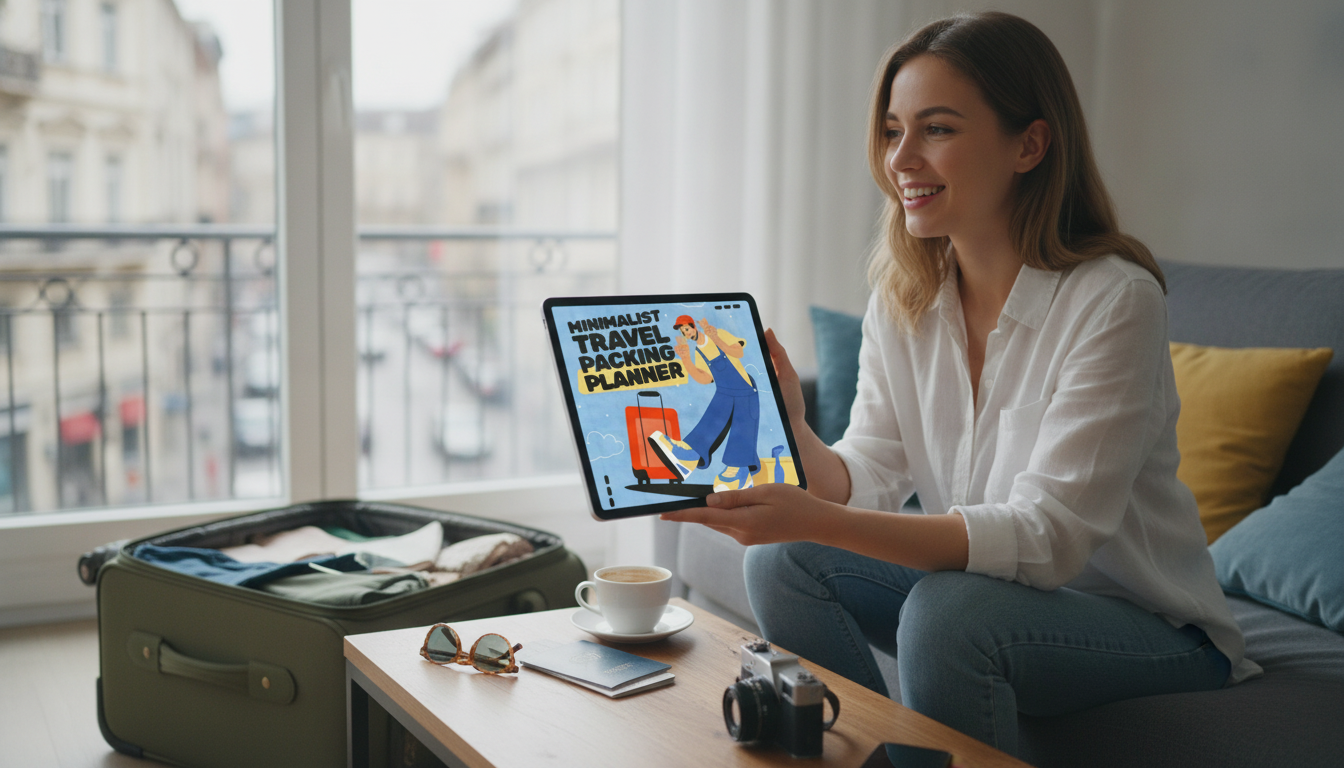
Minimalist Travel Packing Planner: A Digital Guide to Pack Light, Stay Organized, and Travel Calmly
Packing light is less about owning fewer things and more about making better decisions before the suitcase opens. A minimalist packing planner turns that decision-making into a simple, repeatable system—so essentials are covered, outfits make sense, and last-minute stress drops. Instead of “just in case” piles, you get a clear plan built around your trip, your limits, and what you actually wear and use.
What a minimalist packing system changes
A minimalist packing system replaces reactive packing with a quick framework that’s easy to repeat for every trip. The biggest shift is moving from “stuff piling” to a checklist-based plan built around your activities, the weather range, and whether you’ll have laundry access. When categories have clear caps (clothes, toiletries, tech, documents), duplicates naturally disappear—no extra chargers, no third hoodie, no mystery toiletries bag “just in case.”
It also prevents the most common misses (chargers, adapters, prescription meds) by using a standard “always pack” core list. And because you track what was actually used, repacking on the return trip gets faster: you already know what belongs in your bag, what can be left behind next time, and what needs replenishing.
Start with the trip profile (the 5 decisions that drive everything)
Minimalist packing works best when it starts with a small set of choices. Once these are set, the packing list almost builds itself.
| Decision | Quick options | Notes to fill in |
|---|---|---|
| Length | 1–3 days / 4–7 / 8+ | Laundry plan? |
| Weather | Warm / Mild / Cold / Mixed | Layers needed? |
| Activities | City / Work / Outdoor / Beach | Any special gear? |
| Luggage limits | Personal item / Carry-on / Checked | Airline rules? |
| Non-negotiables | Meds / devices / comfort | What cannot be replaced? |
Keep the trip profile short and specific: dates, location(s), temperature range, and a realistic laundry plan (sink wash, laundromat, or hotel service). Then list activities as “capsules”—work meeting capsule, hiking capsule, beach capsule—so you only pack the extras that earn a spot.
Build a small capsule wardrobe that actually works
A capsule wardrobe isn’t about looking repetitive—it’s about making every item cooperate. Start with a 2–3 color base so every top matches every bottom. Then choose one “hero layer” that covers most conditions: a light jacket, cardigan, or shell. The goal is to avoid packing multiple outerwear pieces that all solve the same problem.
Favor re-wearable fabrics and simple silhouettes that can shift from casual to nicer with one swap (shoes, accessories, or a layer). A practical ratio is more tops than bottoms, since tops show wear faster and you’ll want fresh options. Include one outfit that fits the nicest setting on your calendar—dinner out, event, or meeting—so you’re covered without packing a second “formal” backup.
Shoes are where many bags get heavy. For most trips, cap it at two pairs: one everyday pair plus one purpose pair (dressy, athletic, or sandals) only if it serves a real activity.
The core minimalist packing list (the repeatable default)
Once you have a repeatable default, packing becomes faster because you’re not reinventing the basics each time.
- Documents: ID/passport, tickets/confirmations, insurance info, emergency contacts, backup payment method.
- Tech: phone, charger, power bank, earbuds, plug adapter (if international), essential work device.
- Toiletries: travel-size basics, toothbrush, deodorant, minimal skincare, prescription items.
- Clothing basics: underwear/socks set, versatile tops/bottoms, sleepwear, one warm layer.
- Health & comfort: small first-aid basics, pain relief, hand sanitizer, reusable water bottle.
- Extras that earn their spot: compact tote, laundry bag, small stain remover, sunglasses.
If flying carry-on, keep liquids together for a faster checkpoint experience and follow current requirements (see the TSA liquids rule). For destination-specific health prep, consult CDC Travelers’ Health for guidance and updates.
Packing smarter: space, weight, and wrinkle control
How a digital packing planner keeps trips light and stress-free
Minimalist Travel Packing Planner: what it is and who it’s for
Minimalist Travel Packing Planner | Digital Packing Guide for Light, Smart & Stress-Free Trips is a digital packing guide built around structured lists, planning prompts, and a straightforward workflow. It’s a strong fit for carry-on travelers, frequent weekend trips, business travel, and anyone who tends to overpack “just in case.” Digital formatting makes it easy to update for different destinations, seasons, and luggage rules without rewriting your system each time.
For trips where calm matters as much as efficiency—like traveling with kids or coordinating multiple schedules—pairing a packing system with simple connection activities can help the whole trip feel smoother. Consider Stronger Together: Family Bonding Pack for screen-free ideas and checklists that keep downtime intentional. And for travelers who want a steadier mindset on the go, Calm Your Mind: Guided Meditation Series can support a calmer routine during flights, hotel transitions, and busy days.
A simple packing workflow (15–30 minutes, start to finish)
FAQ
How far in advance should packing start to avoid last-minute stress?
Start 2–3 days before departure by drafting your list and confirming laundry, weather, and activities. Pack the night before (or the morning of, if you prefer) using a saved core list so you’re not making fresh decisions under time pressure.
What’s the easiest way to avoid overpacking for a 1-week trip?
Use a capsule wardrobe, plan a simple re-wear/laundry strategy, and cap shoes at two pairs. Build your list by activities first, then do one pass to remove duplicates and “maybe” items that don’t match a real plan.
Is a digital packing planner useful if traveling with only a personal item?
Yes—templates help you set strict caps per category and focus on multipurpose layers. A compact in-transit essentials pouch also keeps your most important items accessible without taking up much space.









Leave a comment