Homework Help System: Routines, Study Space, Independence
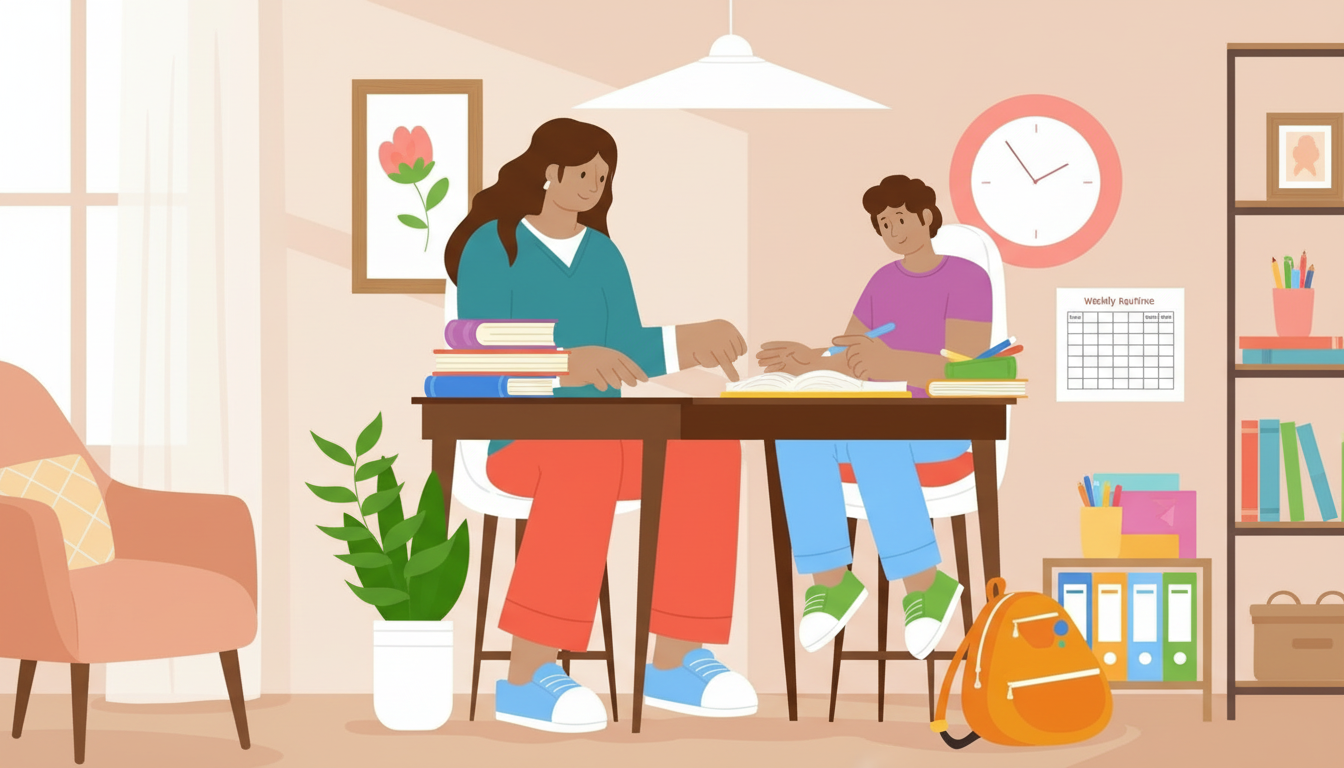
Homework Help Made Easy: A Parent Toolkit for Study Habits, Smart Routines, and Independent Learning
Homework runs smoother when expectations are clear, the environment supports focus, and kids learn a repeatable process they can own. A simple “homework system” reduces daily friction: fewer reminders, less guessing, and more follow-through. Below is a practical home setup, strategies for common hurdles, and a lightweight toolkit approach that helps kids build study habits and independence over time.
What Changes When Homework Has a System
- Less arguing: routines replace repeated reminders and negotiations.
- More confidence: kids know what “starting” looks like and what to do when stuck.
- Better follow-through: small, consistent habits beat occasional long sessions.
- Clear roles: parents support the process, kids do the thinking.
That last point matters most. When the adult becomes the “answer machine,” kids learn to wait. When the adult becomes the “process coach,” kids learn to begin, persist, and check their work—skills that carry into tests, projects, and independent study.
Set Up a Homework Routine That Actually Sticks
A routine works best when it’s predictable but flexible. Aim for consistency without turning your evening into a stopwatch.
- Pick a consistent time window tied to an existing cue (after snack, after practice, after dinner).
- Create a predictable start ritual (water, materials out, 2-minute plan, begin first task).
- Use short work blocks with quick breaks for younger kids; longer blocks for older students.
- End with a 2-minute wrap-up: check directions, pack backpack, set a reminder for unfinished items.
Sample Homework Routine by Age
| Age/Grade Band | Work Block | Break | Parent Support | Independence Goal |
|---|---|---|---|---|
| K–2 | 10–15 min | 3–5 min | Stay nearby; prompt with questions | Start work with one reminder |
| 3–5 | 15–25 min | 5 min | Check-in at the start and midpoint | Use a checklist without hovering |
| 6–8 | 25–35 min | 5–8 min | Help plan; review completed work | Try first, then ask for help |
| 9–12 | 35–50 min | 8–10 min | Discuss priorities; support self-advocacy | Plan and complete independently |
Build a Study Space That Reduces Friction
The best homework space isn’t necessarily a perfect desk setup—it’s a place that makes starting easy and distraction harder.
- Designate a consistent spot: quiet, well-lit, and stocked (pencils, paper, charger, calculator if needed).
- Reduce distractions: put the phone out of reach; use a website blocker when appropriate.
- Keep frequently needed materials in a bin or caddy so starting is fast.
- Use visual cues: a short checklist, a timer, and a place for “turn in” items.
For families with busy homes, a “portable homework caddy” can be a game-changer. Kids learn that homework begins when the caddy comes out—no scavenger hunt required.
Homework Strategies That Teach Problem-Solving (Not Dependence)
Helping doesn’t mean explaining every step. It means teaching kids what to do when learning feels uncomfortable.
- Replace answers with prompts: “What’s the question asking?” “Where could the example be?” “What’s the first step?”
- Use the 3-try rule: try three strategies (re-read, look at notes, do an easier example) before asking for help.
- Encourage “show your work” habits for math and multi-step tasks; it makes errors easier to fix.
- Teach time estimation: write a quick guess, track actual time, adjust next time.
When kids can name their strategy (“I re-read it, checked my notes, and tried an example”), they’re building the foundation for independent learning—and teachers can diagnose issues faster when something truly doesn’t click.
When Homework Turns Into Stress: A Calm Plan for Tough Days
Sleep and recovery matter here. Kids who are routinely exhausted have less patience and weaker attention. The CDC summarizes how sleep supports student performance and daily functioning; it’s worth reviewing when homework struggles feel constant (CDC — Sleep and Student Performance).
Printable Toolkit: Turn Good Intentions Into Daily Habits
If you want a done-for-you set of printable pages and step-by-step scripts for common homework roadblocks, see the Homework Help Made Easy Toolkit for Parents – Printable Guide for Creating Study Habits, Homework Strategies & Independent Learning.
For parents who feel depleted at the exact time homework starts, a short reset can make the coaching mindset easier to access: 5-Minute Reset for Exhausted Parents (3 in 1) | Audio Course | Mindfulness Breathing, Emotional Reset & Energy Boost.
A Simple Weekly Check-In That Builds Independence Over Time
To keep connection strong when school stress rises, having a separate “family fun” plan helps balance the week. The Stronger Together: Family Bonding Pack | Digital Family Activities Guide for Kids & Parents | Printable At-Home & Outdoor Connection Activities | Family Time Checklist & eBook offers simple ideas that don’t feel like another task on the to-do list.
Extra Guidance From Trusted Sources
- American Psychological Association (APA) — Helping Children With Homework
- U.S. Department of Education — Helping Your Child With Homework
FAQ
How can a parent help with homework without doing it for the child?
Support the process, not the answers: set a routine, ask guiding questions, and have your child explain their thinking out loud. Encourage the 3-try rule before they ask for help, and focus on checking directions and completeness rather than solving the problems for them.
What if homework takes hours every night?
Track start/stop times for a week and note exactly where time goes (distractions, confusion, redoing work, skill gaps). Use timed work blocks and share specific data with the teacher; many families also set a reasonable “stop point” by age so homework doesn’t consume the entire evening.
How do you motivate a child who refuses to start homework?
Lower the starting barrier with a 2-minute start ritual, then begin with the easiest task to build momentum. Offer limited choices (where to work, which assignment first within a set window) and reward consistency for starting—not perfect grades or flawless work.










Leave a comment