Using a Communication Workbook With a Quiet Child

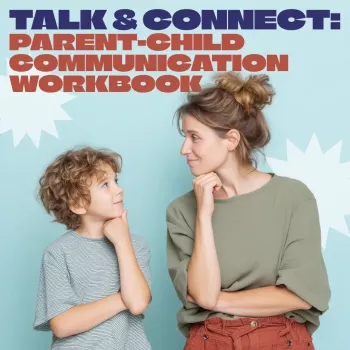
How do I use a parent-child communication workbook if my child doesn’t like talking?
If your child avoids talking, a parent-child communication workbook can still work well—by shifting the “conversation” into low-pressure, nonverbal choices first and building up slowly. The goal is connection, not perfect answers. Start by letting your child control the pace and format, then use the workbook as a shared activity instead of an interview.
Start with the easiest pages (and skip anything that feels too direct)
Begin with pages that use checkboxes, rating scales, drawing, circling words, or short prompts. If a page asks for long answers, offer a shorter version: “Pick one,” “Point to a number,” or “Choose between A and B.” Skipping a prompt isn’t failure; it’s a way to keep trust intact so your child stays willing to return.
Make it side-by-side, not face-to-face
Some kids talk more when they don’t feel watched. Sit next to your child at the table, on the couch, or even in the car. Take turns writing or drawing. You can also read prompts out loud while your child marks responses silently.
Use “write first, talk later” (or not at all)
Invite your child to answer on paper without speaking. Afterward, you can reflect with one gentle line like, “Thanks for showing me.” If they seem open, ask one follow-up question maximum. If not, stop there and end on a calm note.
Model your own answers to lower the pressure
Fill out a prompt about yourself first, using simple, honest responses. This signals safety and shows what “good enough” looks like. Keep it brief—your child shouldn’t feel responsible for comforting you or fixing anything.
Keep sessions short and predictable
Try 5–10 minutes, then end with a consistent closer: a snack, a quick game, or a high-five. Predictable endings help kids who shut down because they fear the talk will drag on or escalate.
For more step-by-step ideas and workbook-friendly activities that support connection without pressure, visit this parent-child communication workbook guide.
FAQ
What if my child refuses to do the workbook at all?
Offer two low-stakes choices (time or location) and start with one “fun” page together. If they still refuse, pause for a day or two and reintroduce it as a short, shared activity—no lectures, no consequences tied to participation.











Leave a comment