More Time, Less Stress: Pomodoro, Matrix, Time Blocking
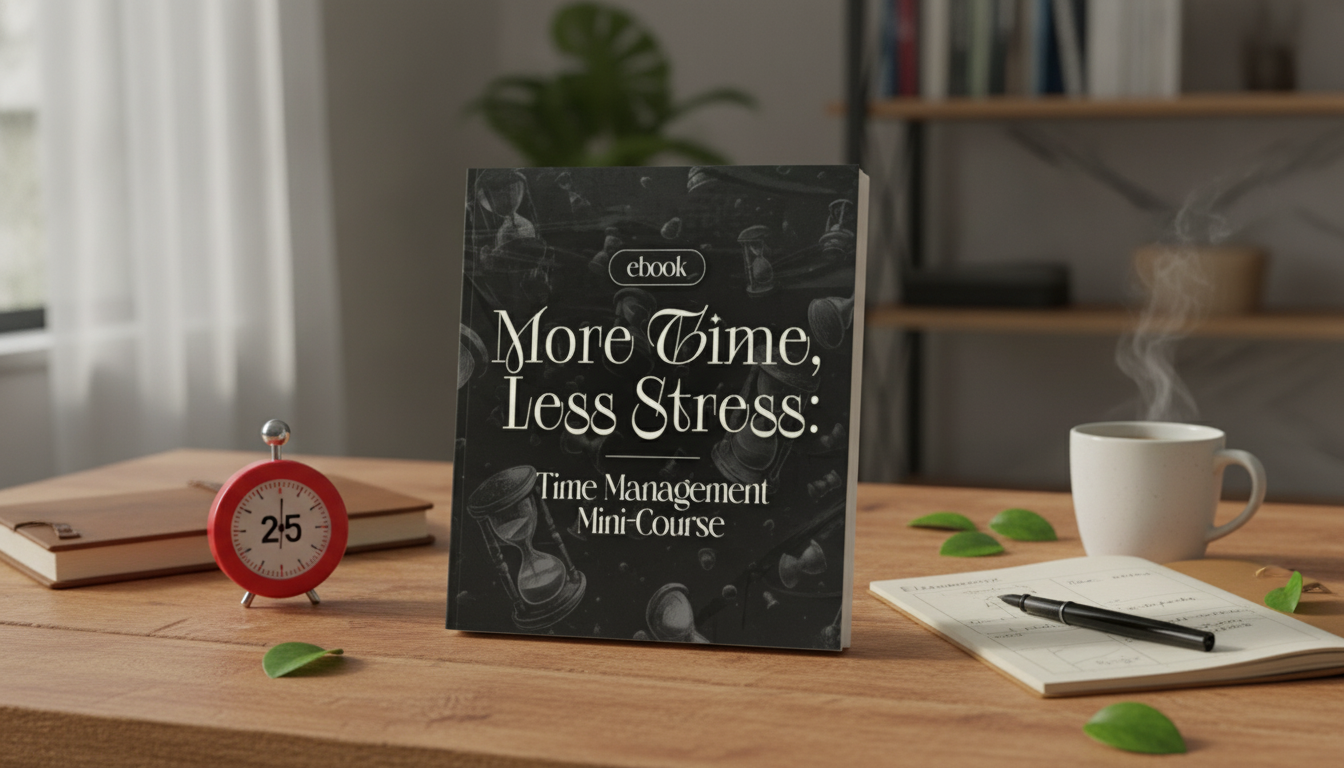
More Time, Less Stress Starts with a Repeatable System
Busy days don’t need more hustle—they need a system that protects focus, clarifies priorities, and reduces the mental load of deciding what to do next. When your brain isn’t constantly renegotiating what matters, it’s easier to finish tasks and easier to actually rest afterward. This mini-course and productivity ebook centers on three proven tools—Pomodoro, the Eisenhower Matrix, and time blocking—then connects them into a simple weekly workflow you can repeat without turning your life into a rigid spreadsheet.
Stress is often described as a response to pressure or demand, especially when resources feel limited. A practical time system helps by making “limited resources” visible—hours, energy, attention—so your plan matches reality. (See the APA’s definition of stress for more context.)
What “More Time, Less Stress” Actually Looks Like Day to Day
- A short morning plan that takes 5–10 minutes instead of a full reset at midday.
- Clear priorities: knowing what matters today, what can wait, and what should be removed.
- Protected focus windows that prevent constant context switching and “busy but behind” feelings.
- A realistic schedule that includes breaks, admin time, and transitions—so the plan doesn’t collapse by noon.
- A consistent end-of-day shutdown that reduces after-hours rumination and unfinished-task anxiety.
The Three Core Tools (and When to Use Each)
Each method solves a different problem. Used together, they create a clean chain: choose priorities, schedule them, then execute with focus.
- Pomodoro: best for starting, sustaining attention, and finishing small-to-medium tasks without burnout.
- Eisenhower Matrix: best for choosing what to do (and what not to do) when everything feels urgent.
- Time blocking: best for translating priorities into a schedule that reflects real capacity.
- Combined approach: choose priorities (Matrix), schedule them (Blocking), execute them (Pomodoro).
- Misconception to avoid: using a timer or a calendar alone won’t fix overload if priorities stay unclear.
Quick guide to Pomodoro, Eisenhower Matrix, and time blocking
| Method | Best for | How to start in 10 minutes | Common pitfall |
|---|---|---|---|
| Pomodoro | Focus and momentum | Pick one task, set 25 minutes, remove distractions, take a 5-minute break | Using it for vague tasks without a clear next action |
| Eisenhower Matrix | Prioritizing under pressure | List tasks, sort into urgent/important quadrants, pick 1–3 top outcomes | Labeling everything as urgent and important |
| Time blocking | Turning priorities into a realistic day | Block 2–4 focus windows, add buffer blocks, reserve a shutdown block | Scheduling wall-to-wall blocks with no transitions |
A Simple Weekly Workflow That Reduces Decision Fatigue
The goal isn’t to plan perfectly. The goal is to stop re-deciding everything all day long.
- Weekly planning (20–30 minutes): define outcomes, check upcoming deadlines, and set 3 “must-win” priorities for the week.
- Daily planning (5–10 minutes): choose the day’s top 1–3 outcomes, then schedule them as time blocks before filling in smaller tasks.
- Execution rhythm: run Pomodoros inside the blocks—one task per block when possible, or a small batch of similar tasks.
- Buffers and spillover: create one flexible “catch-up” block to prevent derailment from unexpected requests.
- End-of-day reset (5 minutes): note next actions, clear the desk, and choose tomorrow’s first Pomodoro task to reduce friction.
Pomodoro That Works for Real Life (Not Just Perfect Focus Days)
Pomodoro is simple on paper: work, break, repeat. In real life, it works best when you adapt it to your energy and define the task clearly before you start. For the original framework, see The Pomodoro Technique.
Eisenhower Matrix Decisions That Protect Time and Energy
When everything feels urgent, prioritizing can feel personal—like you’re judging what matters. The Eisenhower Matrix makes it mechanical: urgent vs. important, then action. If you want a refresher on the model, review an overview of the Eisenhower Matrix (Urgent vs. Important).
Time Blocking Strategies That Don’t Collapse by Midday
Who This Mini-Course and Ebook Helps Most
What’s Included and How to Use It in the First Week
If you want a guided, practical setup, start with More Time, Less Stress: Time Management Mini-Course – Productivity Ebook with Pomodoro, Eisenhower Matrix & Time Blocking Strategies. It breaks each method down, then helps you combine them into one routine you can keep using.
To support the “less stress” side of the equation, pair your planning routine with quick nervous-system-friendly breaks. Two options that fit neatly into Pomodoro breaks or a shutdown routine are Calm Your Mind: Guided Meditation Series and 5-Minute Reset for Exhausted Parents (3 in 1).
Common Obstacles and Quick Fixes
FAQ
How long does it take to see results with Pomodoro, the Eisenhower Matrix, and time blocking?
Many people notice improved clarity and less stress within a week of consistent use. Sustainable productivity gains usually build over 2–4 weeks as you review what worked, tune your blocks, and refine your priorities.
Is time blocking too rigid for unpredictable days?
It doesn’t have to be rigid: buffers, an overflow block, and themed blocks make the schedule more adaptable. When plans change, a quick 5-minute re-plan—reconfirm today’s top outcome and move lower-priority blocks—keeps the day functional.
What if everything feels important and I don’t know what to prioritize?
Use the Eisenhower Matrix to separate urgency from importance, then limit yourself to 1–3 outcomes for the day. If you’re still stuck, pick the single highest-impact next step and start your first Pomodoro to create momentum.










Leave a comment