Calm Your Mind: Guided Audio Meditations for Anxiety
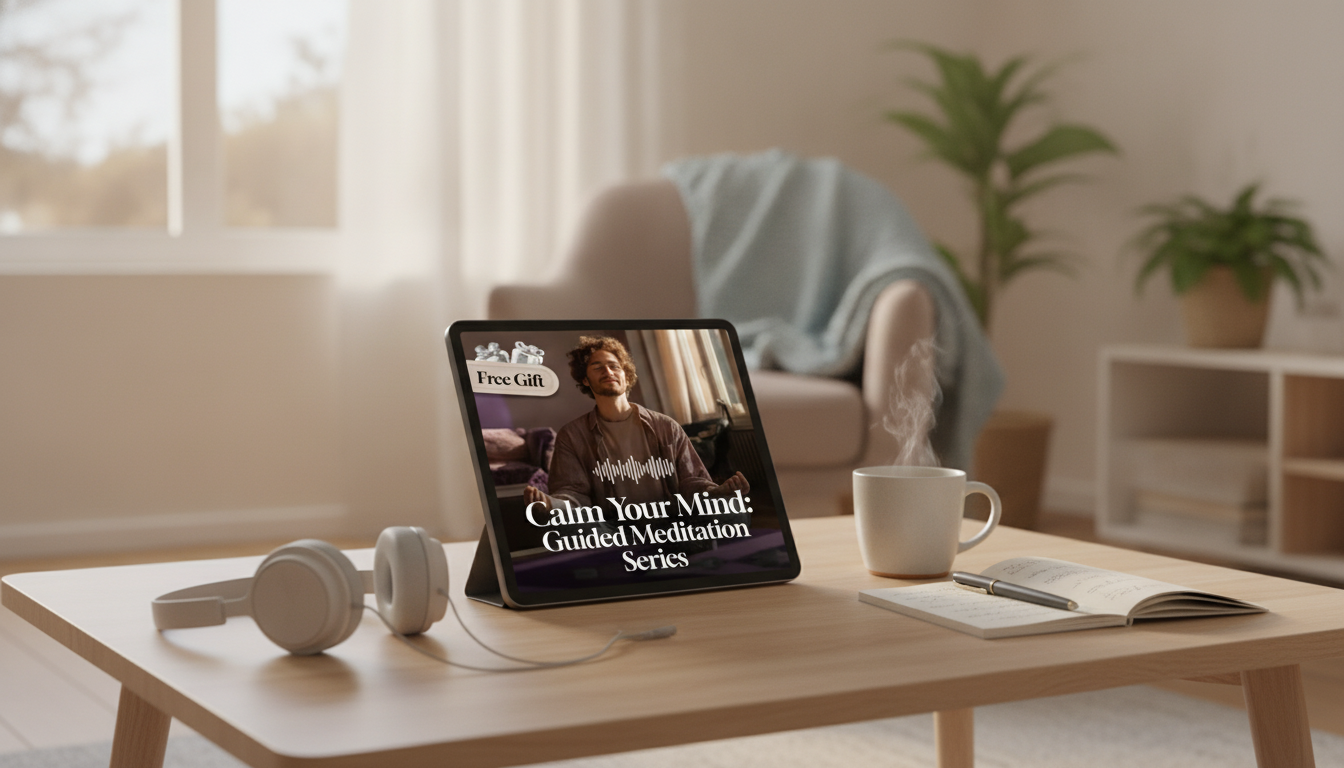
Calm Your Mind: A Guided Audio Meditation Series for Anxiety Relief
Racing thoughts, tension in the body, and a constant sense of “on” can make it hard to feel settled. Calm Your Mind: Guided Meditation Series | Audio Course | Anxiety Relief Meditation is a guided meditation audio course designed to help slow the mental spiral, relax the nervous system, and build a steadier baseline—one session at a time. Instead of trying to force your mind to be quiet, you’ll practice returning to simple anchors like breathing, body sensations, and grounding cues, so calm becomes more accessible in everyday moments.
Mindfulness and meditation are widely used for stress and anxiety support, and research organizations continue to evaluate their benefits and safety. For more background, see the NCCIH overview on meditation and mindfulness and the American Psychological Association’s introduction to mindfulness meditation.
What This Guided Meditation Series Helps With
- Easing anxious rumination by returning attention to breath, body sensations, and grounding cues
- Releasing muscle tension with paced relaxation prompts and gentle body scanning
- Creating a repeatable wind-down routine for evenings, work breaks, or high-stress moments
- Building confidence in meditation with clear guidance that removes guesswork
- Supporting emotional regulation by practicing non-judgmental noticing rather than fighting thoughts
When anxiety is high, the hardest part is often knowing what to do next. Guided audio offers a steady “next step,” helping attention move from the swirl of thoughts back to a felt sense of the present—without requiring extra effort, screens, or a long learning curve.
What’s Included
- A guided audio series centered on calming skills: grounding, breathwork, and mindful awareness
- Sessions that can be repeated as needed—useful for forming a daily or “as-needed” practice
- Audio-first format for screen-free support during commutes, breaks, or bedtime routines
- Designed for beginners while still useful for experienced meditators needing a reset
This format is especially helpful when you want support while lying down, resting your eyes, or stepping away from your phone. Repeating the same session can also make the cues feel familiar—like a well-worn path back to baseline.
How to Use the Course for Different Moments of Anxiety
- During a spike: choose a short session, sit comfortably, and focus on the next single instruction (not the whole process)
- Before sleep: lower lights, keep volume low, and let the guidance replace late-night mental replay
- At work: use a session as a structured break to reduce stress buildup rather than waiting for burnout
- After overstimulation: pair the audio with a simple sensory reset (warm tea, a blanket, or a quiet room)
- For consistency: repeat the same session for a week to make the calming cues feel familiar
Quick Routine Options
| Situation | Suggested setup | Goal |
|---|---|---|
| Midday stress | Seated, feet on the floor, headphones optional | Downshift from fight-or-flight to steadier focus |
| Evening unwind | Lying down or reclined, low light | Reduce mental chatter and physical tension |
| Before a tough conversation | Standing or seated, slow breathing | Respond with clarity rather than reactivity |
| Post-scroll overload | Phone facedown, eyes softened or closed | Reduce stimulation and return to the present moment |
Why Guided Audio Can Feel Easier Than Silent Meditation
- External structure reduces the pressure to “do it right” when the mind is busy
- Guidance helps notice anxious thoughts as events in the mind, not emergencies to solve immediately
- A consistent voice and pacing can become a cue of safety for the nervous system over time
- Audio supports eyes-closed practice, which can deepen relaxation for many people
- Repetition builds familiarity—often the missing ingredient when anxiety is unpredictable
Silent meditation can be powerful, but it can also feel like being left alone with the loudest part of your mind—especially during high-stress seasons. Guided sessions help bridge that gap by keeping you oriented toward an anchor when attention pulls away.
Simple Ways to Get More Benefit from Each Session
If anxiety symptoms are persistent, severe, or interfering with daily life, professional support can be important. The National Institute of Mental Health overview of anxiety disorders is a helpful starting point for understanding when additional care may be appropriate.
Who This Course Is a Good Fit For
Ways to Pair Calm Your Mind with Other Helpful Tools
| Tool | Best for | Link |
|---|---|---|
| 5-Minute Reset for Exhausted Parents (3 in 1) | Audio Course | Mindfulness Breathing, Emotional Reset & Energy Boost | Fast calm when time is tight | View product |
| Whole You: Holistic Wellness Guide | Beginner Wellness Ebook | Digital Download on Nutrition, Exercise, Mental Health & Self-Care | Building supportive daily habits | View product |
| Stronger Together: Family Bonding Pack | Digital Family Activities Guide for Kids & Parents | Printable At-Home & Outdoor Connection Activities | Family Time Checklist & eBook | Lowering stress through connection and routine | View product |
Product Details
| Item | Details |
|---|---|
| Product page | https://grandhitmart.shop/calm-your-mind-guided-meditation-series-audio-course-anxiety-relief-meditation/ |
| Price | 28.99 USD |
| Stock status | In stock |
FAQ
How often should the sessions be used to notice a difference?
Using the sessions daily or 3–5 times per week tends to work well for most people. Consistency matters more than length, and repeating a favorite session can help your body recognize the calming cues faster.
Is this course suitable for beginners who struggle to “clear the mind”?
Yes. The goal isn’t to stop thoughts—it’s to notice them and gently return to an anchor like the breath or body sensations, using clear prompts so you’re not guessing what to do next.
Can guided meditation replace professional help for anxiety?
Guided meditation can be a supportive tool, but it isn’t a substitute for professional care. If anxiety feels severe, persistent, or tied to safety concerns, reaching out to a qualified clinician is an important step.









Leave a comment