Pet Travel Checklist: Safe Packing for Dogs & Cats
Pet Travel Essentials Checklist for Safe Trips (Dogs & Cats)
A calm, safe trip starts with preparation. Use the checklist below to cover identification, comfort, health, feeding, and on-the-road safety—plus a printable planner to keep everything organized for road trips, flights, and vacations with dogs or cats.
Before You Pack: Trip Details That Prevent Last-Minute Stress
- Confirm destination rules: pet fees, size/breed limits, leash policies, and any vaccination documentation required by your hotel, rental, campground, or transportation provider.
- Schedule a vet check when it matters: long drives, flying, crossing borders/state lines, or managing chronic conditions. If you’re unsure what paperwork you may need, start with AVMA’s traveling with your pet guidance.
- Update identification: confirm microchip registration is current, replace faded collar tags, and save a recent photo on your phone (full-body and close-up of the face).
- Plan safe containment: a crash-tested carrier/crate/harness for car travel, and an airline-compliant carrier if you’re flying.
- Map routines: feeding times, potty breaks, exercise windows, and quiet decompression time after arrival—routine is your fastest path to a calmer pet.
- Locate veterinary help: note nearby clinics at your destination and along the route. For cross-border or regulatory considerations, reference CDC travel requirements and USDA APHIS pet travel resources.
Core Packing List: The Non-Negotiables for Dogs and Cats
- Food and water: pack enough for the full trip plus 2 extra days. Bring familiar treats to support routine and reward calm behavior.
- Bowls: collapsible travel bowls or lightweight stainless bowls. Keep a dedicated water bowl to reduce spills and cross-contamination.
- Leash and backup leash: plus a harness or well-fitted collar. For cats, only use a harness if they’re trained and comfortable in it.
- Waste supplies: poop bags for dogs; litter, scoop, and disposable litter bags for cats. Add paper towels for quick cleanups.
- Comfort items: familiar blanket/bed, one or two favorite toys, and a worn T-shirt that smells like home for reassurance.
- Grooming basics: brush/comb, pet-safe wipes, towel, and optional paw balm for hot pavement or winter salt.
Health & Safety Kit: What to Bring (and What to Avoid)
- Medications: bring original labeled containers and pack a few extra doses in case of delays. Set phone reminders for dosing times across time zones.
- Medical records: vaccination proof, rabies certificate, and a brief medical summary (conditions, allergies, current meds).
- First-aid basics: gauze, non-stick pads, vet wrap, antiseptic wipes, blunt-tip scissors, tweezers, and disposable gloves.
- Parasite prevention: ensure flea/tick/heartworm prevention is current for the travel region and season.
- Calming support: talk with your veterinarian about travel anxiety options. Avoid giving human medications unless explicitly prescribed for your pet.
- Heat/cold safety: never leave a pet in a parked car. Bring a sunshade, cooling towel, or extra blanket depending on weather.
Car Travel Plan: Breaks, Seating, and Motion Sickness
- Secure placement: keep pets in the back seat or cargo area in a carrier/crate or with a crash-tested harness. Never allow riding on laps or roaming in the vehicle.
- Break schedule: stop every 2–3 hours for water, potty, and short movement. Keep cats in a secure carrier during stops to prevent escapes.
- Motion sickness strategy: offer a light meal several hours before departure and keep cleaning supplies accessible. If nausea is common, ask your vet about anti-nausea options.
- Hydration pacing: offer small amounts of water frequently; avoid over-drinking right before a long stretch without stops.
- Temperature control: aim vents away from the face and watch for panting, drooling, weakness, or restlessness.
- Arrival decompression: set up a quiet zone first (bed, water, litter box), then allow gradual exploration.
Printable Planner: Organize by Category and by Day
Quick Pet Travel Checklist (Print-Friendly)
| Category | Must-Pack Items | Notes |
|---|---|---|
| ID & Documents | Collar tag, microchip info, recent photo, vaccination proof | Keep copies on phone + paper |
| Containment & Safety | Carrier/crate, harness, seatbelt tether, leash + backup | Practice short rides beforehand |
| Food & Water | Food (extra 2 days), treats, water, bowls | Stick to familiar diet |
| Hygiene | Poop bags, wipes, paper towels, litter + scoop (cats) | Pack a small odor-control bag |
| Health | Meds, first-aid kit, tick removal tool, vet contact list | Bring original labeled meds |
| Comfort | Bed/blanket, toys, calming item | Set up a quiet zone on arrival |
Arrival Checklist: Set Up a Safe Space in 10 Minutes
Helpful Printables and Low-Stress Add-Ons
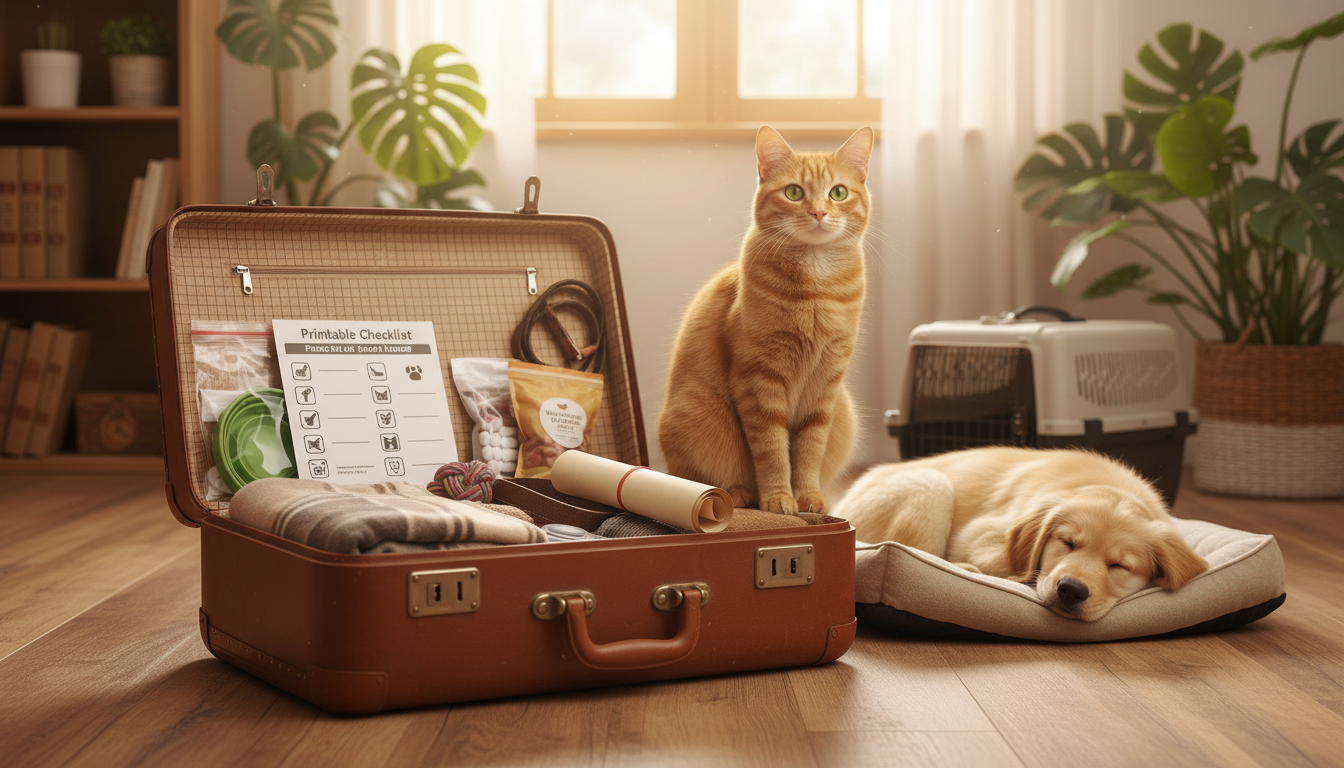
If you want everything in one place, Printable Pet Travel Essentials Checklist for Safe Trips combines packing, routine planning, and last-minute items so you can prep faster and forget less.
For households traveling with kids too, Stronger Together: Family Bonding Pack can help fill downtime at hotels or rest stops with simple connection activities that keep the whole crew calmer.
If travel days feel stressful, a short reset can help you stay steady while your pet adjusts. Calm Your Mind: Guided Meditation Series is an easy option to use before departure or after check-in.
Printable Pet Travel Essentials Checklist and Planner
FAQ
What should be in a pet travel emergency kit?
Include labeled medications, basic first-aid supplies (gauze, non-stick pads, vet wrap, antiseptic wipes), tweezers, gloves, a recent photo, vaccination proof, and a destination/route vet contact list.
How often should dogs and cats take breaks on a road trip?
Plan stops about every 2–3 hours for dogs. For cats, offer water and keep them secure in a carrier during stops, with litter access at longer intervals when safely contained indoors.
Is it safe to feed a pet right before traveling?
A light meal several hours before departure helps reduce motion sickness risk. Avoid heavy meals right before driving and keep treats small and familiar.








Leave a comment