Travel Security & Scam Awareness: Digital Safety Checklist
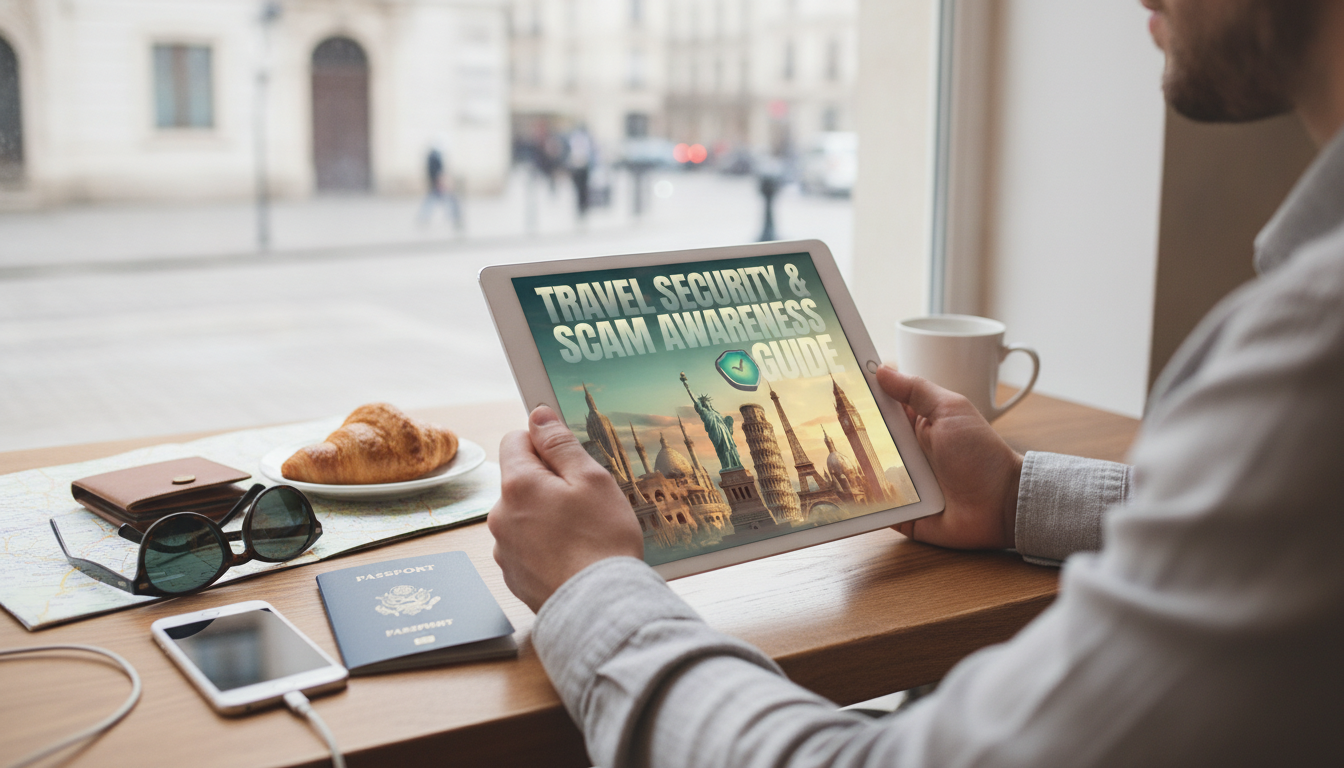
Travel Security & Scam Awareness Guide: Digital Safety Handbook for Tourists, Solo Travelers & Business Trips
Travel puts you in high-trust situations on unfamiliar streets and networks—exactly where scammers and opportunists thrive. A few simple habits can prevent most losses: tighten accounts before departure, treat public Wi‑Fi as hostile, keep cards in your sight, and recognize the “pressure + confusion” patterns that drive street scams. For a ready-to-use checklist you can keep on your phone, see the Travel Security & Scam Awareness Guide (Digital Safety Handbook).
What changes when traveling: risk factors people overlook
Most travel mishaps aren’t caused by “bad luck.” They happen when normal routines get disrupted and you’re pushed into faster decisions.
- High-trust environments: when lost, tired, or rushing to catch transport, it’s easier to accept “help” without vetting it.
- Unfamiliar norms: currency quirks, tipping expectations, transit rules, and language barriers create openings for manipulation.
- Device exposure: constant Wi‑Fi switching, public charging, and shoulder-surfing raise the odds of account compromise.
- Time pressure: business schedules and tight itineraries lead to rushed choices at ATMs, check-in desks, and rideshares.
- Visibility: luggage tags, conference badges, and hotel key sleeves can reveal where you’re staying and what you carry.
Street scams and confidence tricks: patterns to recognize
Scams look different by country, but the mechanics repeat. Watch for these “tells” and you’ll spot trouble earlier.
- Distraction + separation: staged spills, sudden commotion, or “accidental” bumps to create a moment for pickpocketing.
- Authority impersonation: fake police/inspectors demanding passport checks, spot fines, or “verification” of cash.
- Overhelping: strangers insisting on guiding you to an ATM, currency exchange, ticket counter, or “best” shop.
- Forced urgency: claims a train is canceled, a hotel is unsafe, or a “special deal” expires immediately.
- The wrong-change routine: confusion with bills/coins to shortchange anyone who doesn’t verify the amount.
Common scams and quick defenses
| Scenario | What to watch for | Safer move |
|---|---|---|
| Taxi/ride price switch | Meter “broken,” detours, cash-only surprise | Use official apps/stands; confirm fare range; share trip details |
| ATM helper | Stranger offers to “assist,” stands too close, points at screen | Cancel transaction; use indoor ATMs; shield keypad; refuse help |
| Fake Wi‑Fi hotspot | Network name matches venue; login page asks for email/password | Use cellular or VPN; avoid logging into sensitive accounts on public Wi‑Fi |
| Card skimmer at terminal | Device looks bulky/loose; cashier insists taking card away | Tap-to-pay; keep card in sight; use virtual cards where available |
| Hotel front-desk call scam | Caller asks to “verify” card details due to system issue | Hang up; call the hotel via official number; never read full card details |
Digital safety basics that prevent most travel losses
Most “travel fraud” starts with account access: a leaked password, a hijacked email inbox, or a phone that can be unlocked.
- Harden accounts before departure: enable multi-factor authentication, confirm recovery email/phone, and rotate critical passwords.
- Use a password manager: require device unlock (biometric/PIN) and plan for offline access if roaming is limited.
- Minimize what devices carry: remove sensitive files, sign out of unused accounts, and disable auto-login where possible.
- Lock-screen hygiene: hide notification previews, require immediate unlock, and enable “find my device” with remote wipe.
- Backups: confirm cloud backup or encrypted local backup; store a second copy of key documents securely.
- Payment setup: prefer tap-to-pay; turn on transaction alerts; consider travel-only cards with lower limits.
Public Wi‑Fi, SIMs, and VPNs: choosing safe connectivity
Connectivity is where convenience fights security. The goal isn’t perfect safety—it’s fewer high-risk logins on untrusted networks.
- Public Wi‑Fi rule: treat it as hostile; avoid banking, password changes, and sensitive work portals unless protected.
- Safer options: personal hotspot, reputable eSIM/SIM, or a trusted hotel network confirmed at the front desk.
- VPN use: helpful on untrusted networks, but it can’t “fix” phishing or a fake captive portal.
- Disable auto-join: prevent devices from connecting to lookalike networks in airports and cafes.
- Bluetooth and sharing: keep off or restricted in crowded transit hubs to reduce unsolicited connection attempts.
Money safety: ATMs, cash, and cards without becoming a target
Solo travelers: practical tactics for staying harder to target
If travel stress makes it harder to stay alert, consider building a short calming routine before transit days. The Calm Your Mind: Guided Meditation Series can help you reset quickly so you’re less likely to make rushed decisions.
Business trips: protecting work devices and company data
If something goes wrong: a fast response checklist
For country-specific updates and help resources, check U.S. Department of State — International Travel. For identity theft steps and reporting guidance, reference the Federal Trade Commission — Scams and Identity Theft. For general crime prevention tips, see Europol — Crime Prevention Advice.
Using the Travel Security & Scam Awareness Guide as a trip companion
Keep a single, consistent reference you can open under pressure: Travel Security & Scam Awareness Guide | Digital Safety Handbook for Tourists, Solo Travelers & Business Trips.
FAQ
Is a VPN enough to stay safe on public Wi‑Fi while traveling?
A VPN can reduce interception risk on untrusted networks, but it doesn’t prevent phishing, fake captive portals, or logging into a lookalike site. When possible, use cellular/hotspot for sensitive accounts and avoid entering passwords on suspicious login pages.
What should be done first if a phone is stolen abroad?
Lock and locate the device immediately using “find my device,” then contact your carrier to block the SIM/eSIM. Next, revoke account sessions and reset passwords starting with email and financial apps, and file a local report if required for replacements or disputes.
How can solo travelers avoid being singled out by scammers?
Move with purpose, limit public map-checking, and use quick refusal scripts instead of engaging in explanations. Split valuables, pre-book key transport legs, and keep a simple check-in routine with someone you trust.









Leave a comment